
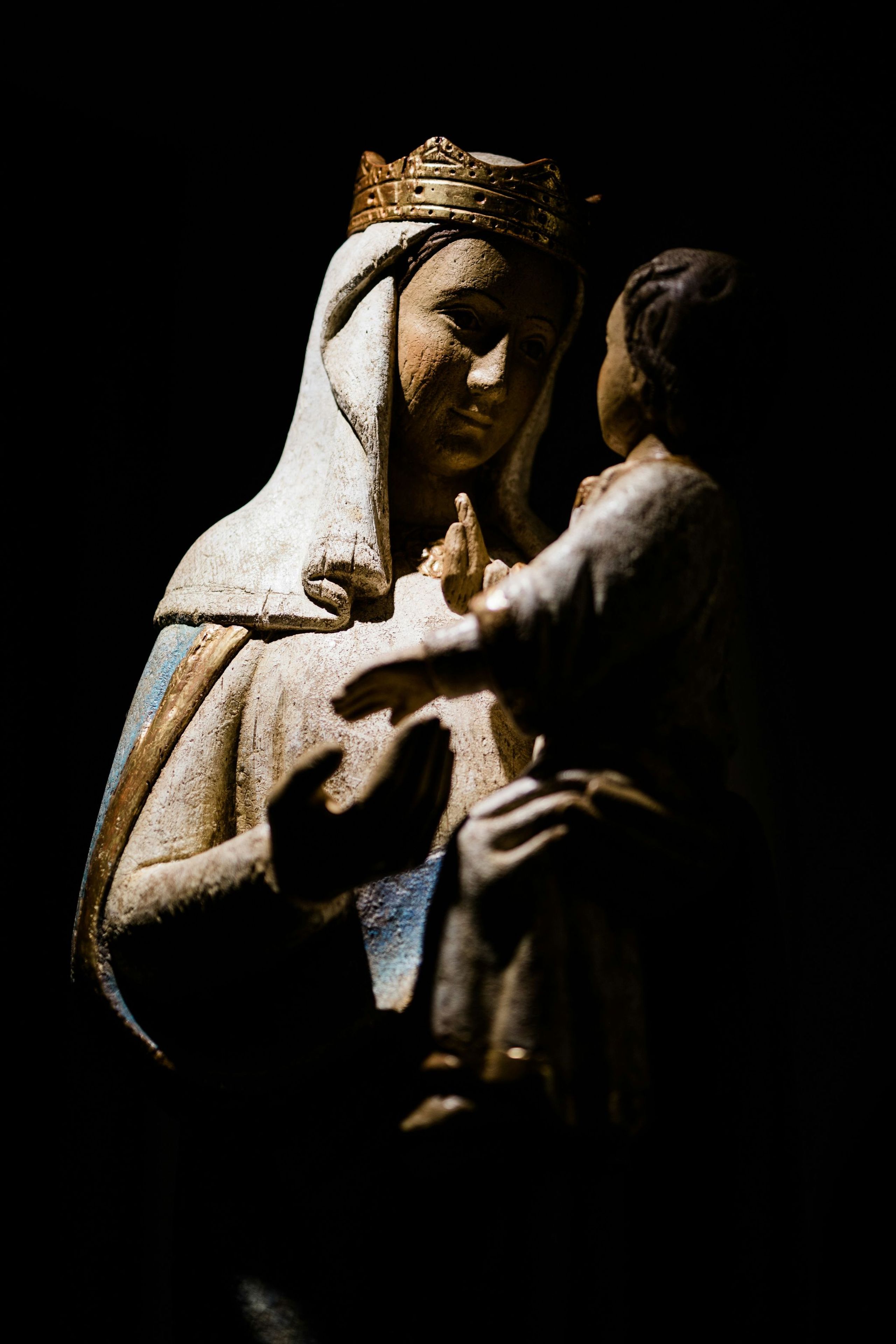
Mary, Mother of God
The Church begins each new year not with resolutions, but with a title, one that was worth fighting for in the 5th century, and still shapes how we understand who Jesus is.
While the world recovers from New Year's Eve, the Church is still celebrating Christmas.
Today is the Octave of Christmas, the eighth day. In Jewish tradition, this was the day a child was circumcised and given his name. It was the day he officially entered the covenant. And so the Church, on this eighth day, gives us a feast not primarily about the infant Jesus, but about the woman who bore him: Mary, Mother of God.
It might sound like a devotional title, something we say without thinking much about it. But this phrase, Mother of God, was once the center of a theological firestorm. Understanding why helps us understand what we actually believe about Jesus.
Why the Title Matters
In the fifth century, a bishop named Nestorius argued that Mary should only be called "Mother of Christ," not "Mother of God." His reasoning seemed careful: surely Mary didn't give birth to God's divine nature. She gave birth to the human Jesus.
But the Church recognized the danger in this. If Mary only gave birth to a human nature, then God didn't truly become man. Jesus would be two separate things, a divine person and a human person inhabiting the same body, rather than one person who is fully God and fully human. And if God didn't truly take on our humanity, then our humanity isn't truly redeemed.
The Council of Ephesus in 431 AD declared what Christians had believed from the beginning: Mary is Theotokos, the Greek word meaning "God-bearer." Not because she gave birth to a nature, but because she gave birth to a person. And that person was God.
When the Council announced this, the faithful in Ephesus poured into the streets with torches and hymns, celebrating through the night. They understood that this title wasn't just about honoring Mary. It was about protecting the truth of who Jesus is, and therefore, the truth of our salvation.
Beginning the Year Differently
There's something striking about how the Church chooses to start the calendar year. The world begins January with resolutions, promises to do more, achieve more, become more through sheer effort. By February, most of these have quietly failed.
Mary offers us a different posture.
At the Annunciation, she didn't present Gabriel with a strategic plan. She didn't list her qualifications or promise great accomplishments. She simply said: "Let it be done unto me according to your word."
This is the fiat: the "let it be" that changed everything. Not striving. Receiving. Not achieving. Opening.
The world says: I will make this year count. Mary says: Let God make of me what He will.
Perhaps the most important thing we can do at the start of a new year isn't to resolve harder, but to receive more deeply. To make space, as Mary did, for God to work.
The First Tabernacle
St. Augustine wrote that Mary "conceived Christ in her heart before she conceived him in her womb." Her yes to God wasn't just physical, it was total. She became the first tabernacle, the first dwelling place of God among us.
And here's the connection we shouldn't miss: what Mary was uniquely, we are called to become. When we receive the Eucharist, we carry the same Lord she carried. We become, in a real sense, God-bearers too.
We carry him out of the church, into the parking lot, into our homes, into our workplaces. The question is whether we, like Mary, have first received him in our hearts.
A Prayer for the New Year
So as this new year begins, let it begin not with a list of things to accomplish, but with a prayer we already know by heart:
Holy Mary, Mother of God, pray for us sinners, now and at the hour of our death.
She who bore the Word made flesh can help us bear him too. She who said yes when everything depended on it can teach us to say yes in the smaller moments of our ordinary days.
Happy New Year. And Merry Christmas. We're still celebrating.