We sin. This isn't a surprise. The Church doesn't expect perfection—she expects us to fall, and she provides a way to get back up.
The Sacrament of Reconciliation is that way.
What happens in Confession?
You enter the confessional—either face-to-face with the priest or behind a screen, your choice. You begin with the sign of the cross and say, "Bless me, Father, for I have sinned. It has been [length of time] since my last confession." Then you confess your sins.
You don't need to remember everything perfectly. You don't need eloquent words. You just need honesty. Tell the priest what you've done, as clearly and simply as you can. He may ask a question or two. He may offer brief guidance. Then he'll give you a penance—usually a prayer or a concrete action—and invite you to pray an Act of Contrition.
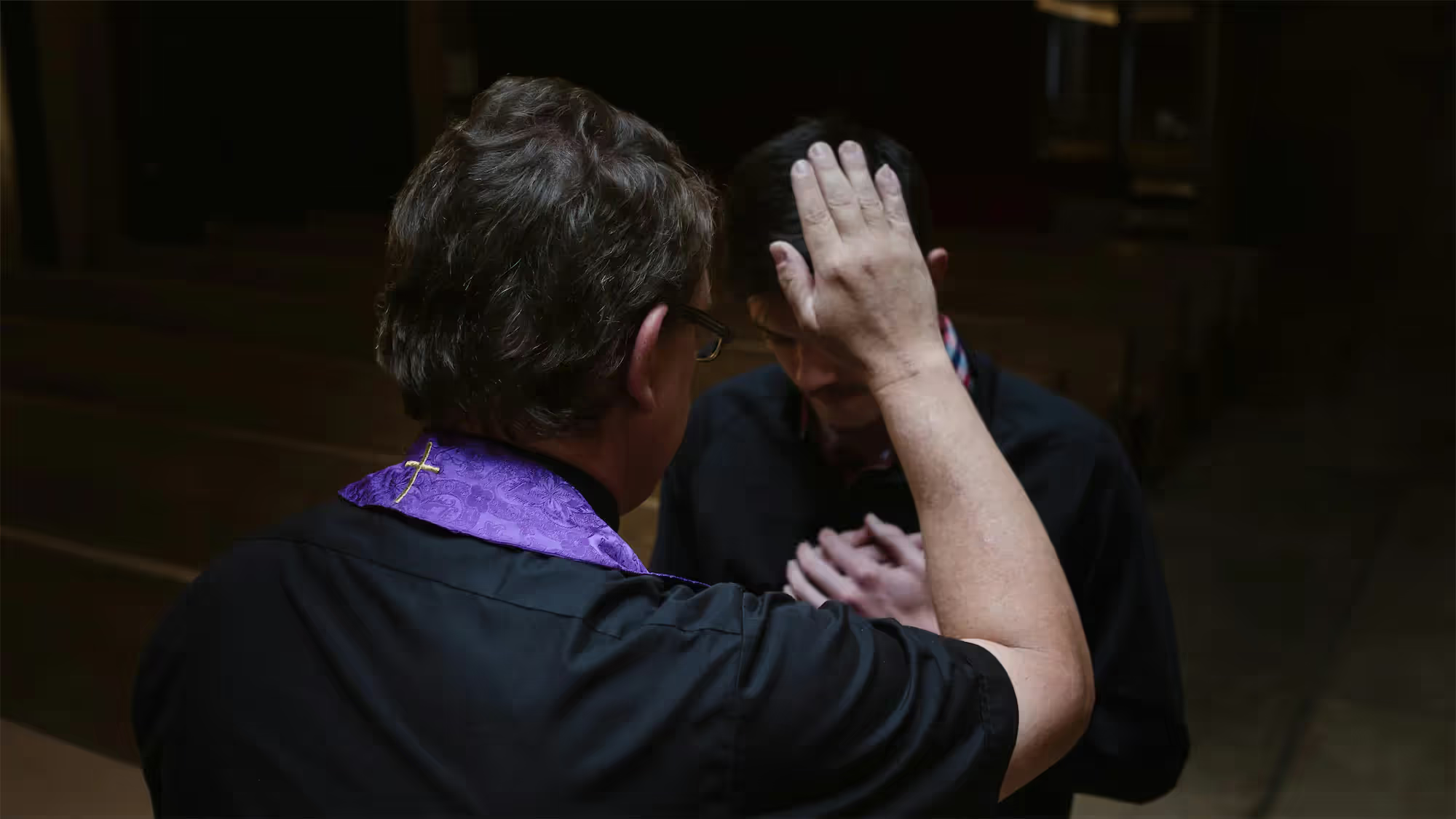
Then comes absolution. The priest extends his hand and speaks the words: "I absolve you from your sins in the name of the Father, and of the Son, and of the Holy Spirit."
And it's done. Your sins are forgiven. Not symbolically. Actually.
Why confess to a priest?
Because Jesus set it up that way.
On Easter night, he appeared to his disciples and said, "Receive the Holy Spirit. Whose sins you forgive are forgiven them, and whose sins you retain are retained" (John 20:22-23). He gave his Church the authority to forgive sins in his name. The priest doesn't forgive by his own power—he acts in persona Christi, in the person of Christ.
There's also something important about speaking your sins aloud to another human being. It's easy to vaguely regret things in the privacy of your own head. It's harder—and more freeing—to name them honestly to someone else and hear the words of forgiveness spoken back to you.
What must be confessed?
Mortal sins must be confessed before receiving Communion. A mortal sin is a grave matter, committed with full knowledge and deliberate consent. If you're unsure whether something qualifies, confess it anyway and let the priest help you sort it out.
Venial sins—lesser failures—don't strictly require confession, but confessing them regularly is good for the soul. It builds the habit of honesty before God and chips away at the patterns that lead to worse things.
How often should I go?
The Church requires confession at least once a year if you're aware of mortal sin. But once a year is a minimum, not a goal.
Many saints confessed weekly. Monthly is a good rhythm for most people. The more regularly you go, the more you notice—both the places you're falling and the places grace is working. Confession becomes less about crisis management and more about ongoing conversion.
What about the seal of confession?
What you confess stays in the confessional. Absolutely. Without exception. A priest cannot reveal what he hears in confession under any circumstances—not to police, not to bishops, not to anyone. This is called the seal of confession, and priests have died rather than break it.
You can speak freely. It's safe.
What if I'm nervous?
Everyone is, at least a little. Especially if it's been a while. But here's the truth: the priest is not there to judge you. He's there to offer you the mercy of Christ. He's heard everything. He won't be shocked. And whatever you're carrying, he wants to help you set it down.
Don't let fear keep you away. The whole point of this sacrament is that you don't have to be perfect to come. You come because you're not.