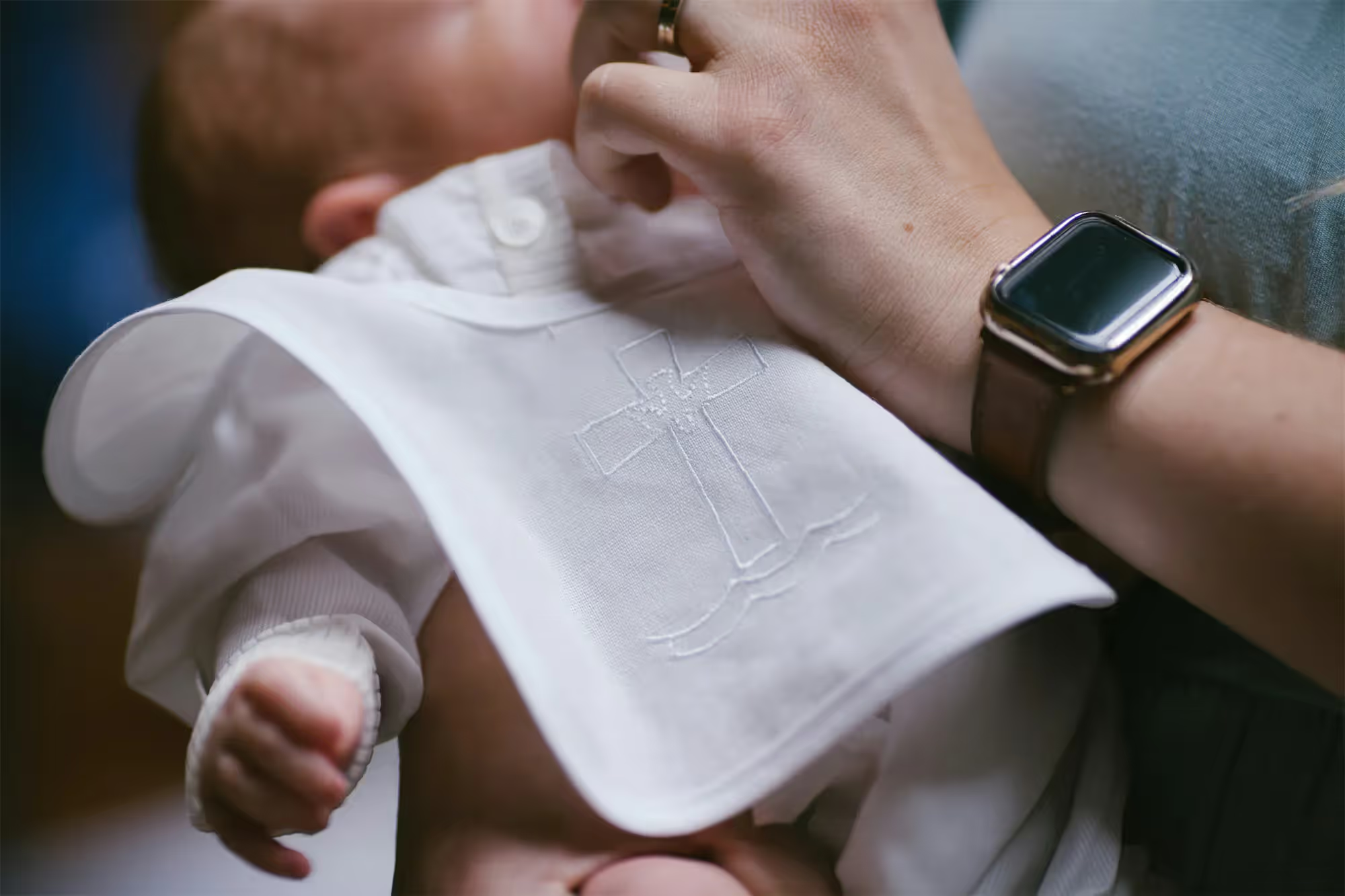
Baptism is the beginning.
It's the first of the seven sacraments, the door through which we enter the Church and the Christian life. Without Baptism, we cannot receive any of the other sacraments. With it, everything else becomes possible.
What happens in Baptism?
Water is poured over the head (or the person is immersed), and the priest or deacon speaks the ancient formula: "I baptize you in the name of the Father, and of the Son, and of the Holy Spirit." That's the essence of the rite. Everything else—the candle, the white garment, the oil, the prayers—surrounds and enriches that central act.
But the water and the words do something. Baptism isn't a symbol. It's a sacrament—an outward sign that actually accomplishes what it signifies. In Baptism, original sin is washed away. We are born again, not of flesh but of water and Spirit (John 3:5). We become children of God, members of Christ's Body, temples of the Holy Spirit.
St. Paul describes it starkly: "We were buried with him through baptism into death, so that, just as Christ was raised from the dead by the glory of the Father, we too might walk in newness of life" (Romans 6:4). To be baptized is to die and rise with Christ.
Why does the Church baptize infants?
Because grace is a gift, not a reward. We don't earn our way into God's family—we're welcomed in. Infant Baptism expresses this beautifully: the child has done nothing to deserve it, and yet God acts. Parents and godparents make promises on the child's behalf, committing to raise them in the faith so that one day they can claim those promises as their own.
What about godparents?
Godparents are chosen to support the baptized person throughout their life, helping them live as a Christian. For infants, this means walking alongside the parents as the child grows. For adults, it means sponsoring them through the OCIA process and beyond. Godparents must be practicing Catholics who have received Baptism, Confirmation, and Eucharist and are living in accordance with the faith.
What does Baptism require of us?
Baptism isn't the finish line. It's the starting gate. The grace given in Baptism is meant to unfold over a lifetime—through the other sacraments, through prayer, through the slow work of becoming who God made us to be. We renounce sin. We profess faith. And we spend the rest of our lives learning what that means.
Every Easter, the whole Church renews its baptismal promises. We remember that we've been claimed by Christ, buried with him, raised with him. Baptism isn't just something that happened once. It's the foundation of everything.