
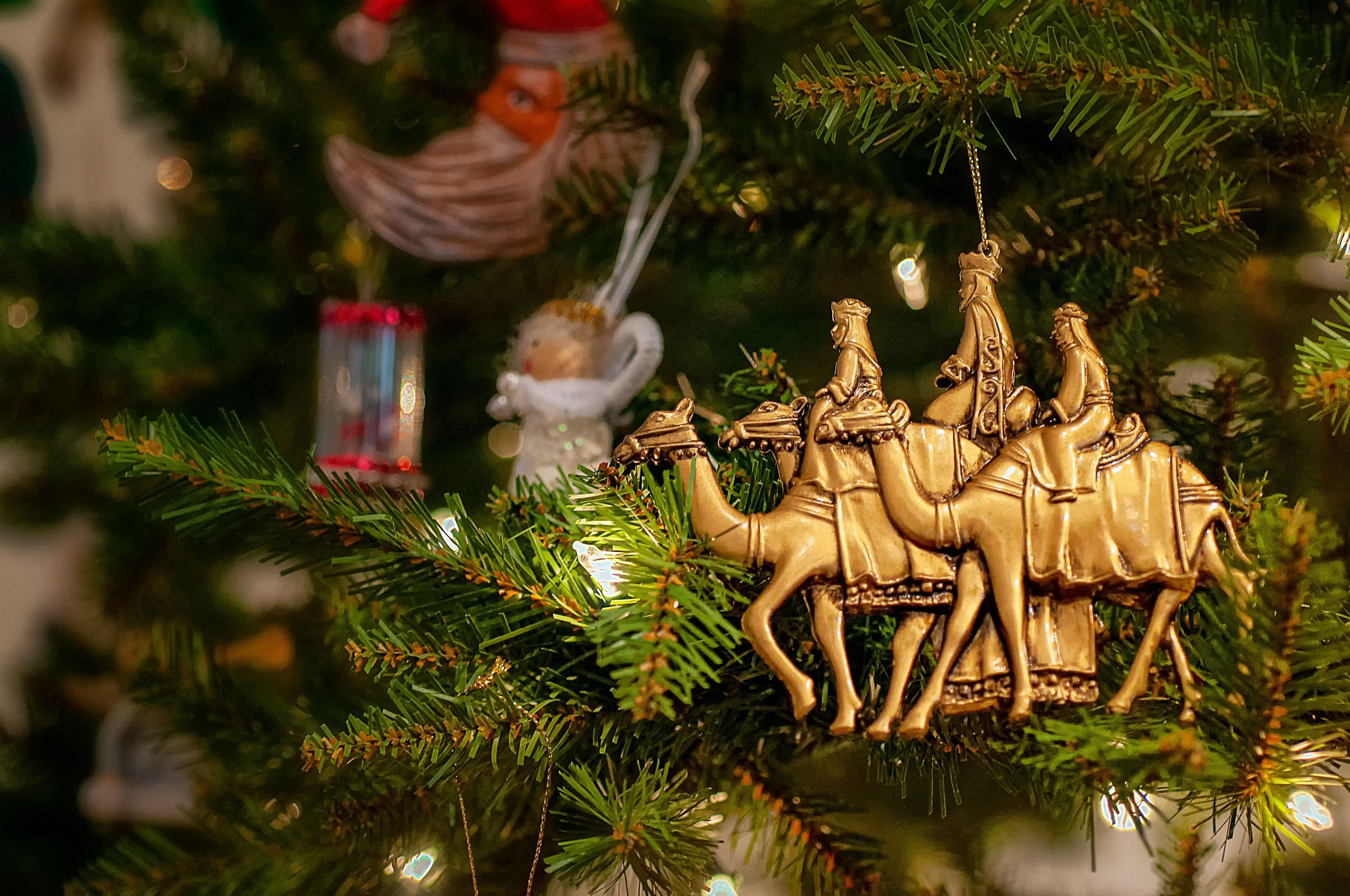
The Twelve Days of Christmas
In the quiet days following December 25th, while the world rushes to pack away Christmas, the Church invites us into something deeper.
If you look around our neighborhoods on December 26, you often see Christmas trees already on the curb. The world treats Christmas as a deadline: a single day to build toward, and then abruptly end.
But the Church, in her ancient wisdom, operates on a different clock. We do not celebrate a single "day" of Christmas. We celebrate a season.
Why? Because the mystery of the Incarnation, God becoming flesh to dwell among us, is too massive to be contained in 24 hours. We need time to let the reality sink in. We need to linger at the manger. This period, known traditionally as the Twelve Days of Christmas (Christmastide), stretches from the Nativity on December 25 to the Epiphany.
It is a time not for packing away, but for unpacking the mystery.
The Octave: Stopping Time
You will notice that for the eight days following Christmas, the Gloria is sung at every Mass. This is the "Octave" of Christmas. The number eight has deep biblical significance. It represents the "new creation," or the eighth day of the week (the Resurrection).
Just as we celebrate Easter for eight days, we treat the days from December 25 to January 1 as one long solemnity. We stop time, in a sense, to gaze at the Child.
The Companions of Christ
One might expect the days following Christmas to be filled with nothing but peace and soft candlelight. Yet the Church immediately gives us a series of feasts that seem jarring if we aren't paying attention. These are the Comites Christi, the "Companions of Christ." They remind us that the wood of the Manger eventually leads to the wood of the Cross.
- December 26: St. Stephen. The very day after we celebrate the birth of Jesus, we celebrate the first Martyr.
- December 27: St. John the Evangelist. Our Patron. The "Beloved Disciple" is the only Apostle who did not die a martyr's death, yet he suffered exile. He teaches us that to love the Incarnate Word is to remain close to His heart, just as John did at the Last Supper.
- December 28: The Holy Innocents. We remember the children lost to Herod's fear. This is the Church being a realist. We do not ignore the suffering of the world. We recognize that Christ came precisely to enter into that suffering.
The Mother of God
The Octave concludes on January 1st with the Solemnity of Mary, Mother of God. It is fitting that we end the first week by honoring the Theotokos (God-bearer). Without her Fiat, her yes, we would not have Christmas at all.
Epiphany: The Manifestation
The season culminates in the Epiphany. The word comes from the Greek epiphaneia, meaning "manifestation" or "striking appearance."
If Christmas is the revelation of Jesus to Israel (the shepherds), Epiphany is his revelation to the Gentiles (the Magi). This is our feast. It reminds us that the Gospel is not meant to stay in Bethlehem. It is meant to go to the ends of the earth. The Magi bring gifts, but they leave with something greater: a new direction. As the Gospel tells us, "they returned by another way." An encounter with Christ always changes our path.
How to Live the Season
How do we live this out in a culture that has moved on?
- Keep the Tree Up. Let it be a witness to your neighbors that the celebration continues.
- Feast. Do not return to fasting just yet. These are days of rejoicing.
- Visit the Tabernacle. Bethlehem literally translates to "House of Bread." The Manger is a feeding trough. Jesus was placed there to show us that He is food for the world. He is still present, Body, Blood, Soul, and Divinity, in our own tabernacle.
Come spend some quiet moments with Him before the season closes. The world rushes on, but we remain.
Peace.