
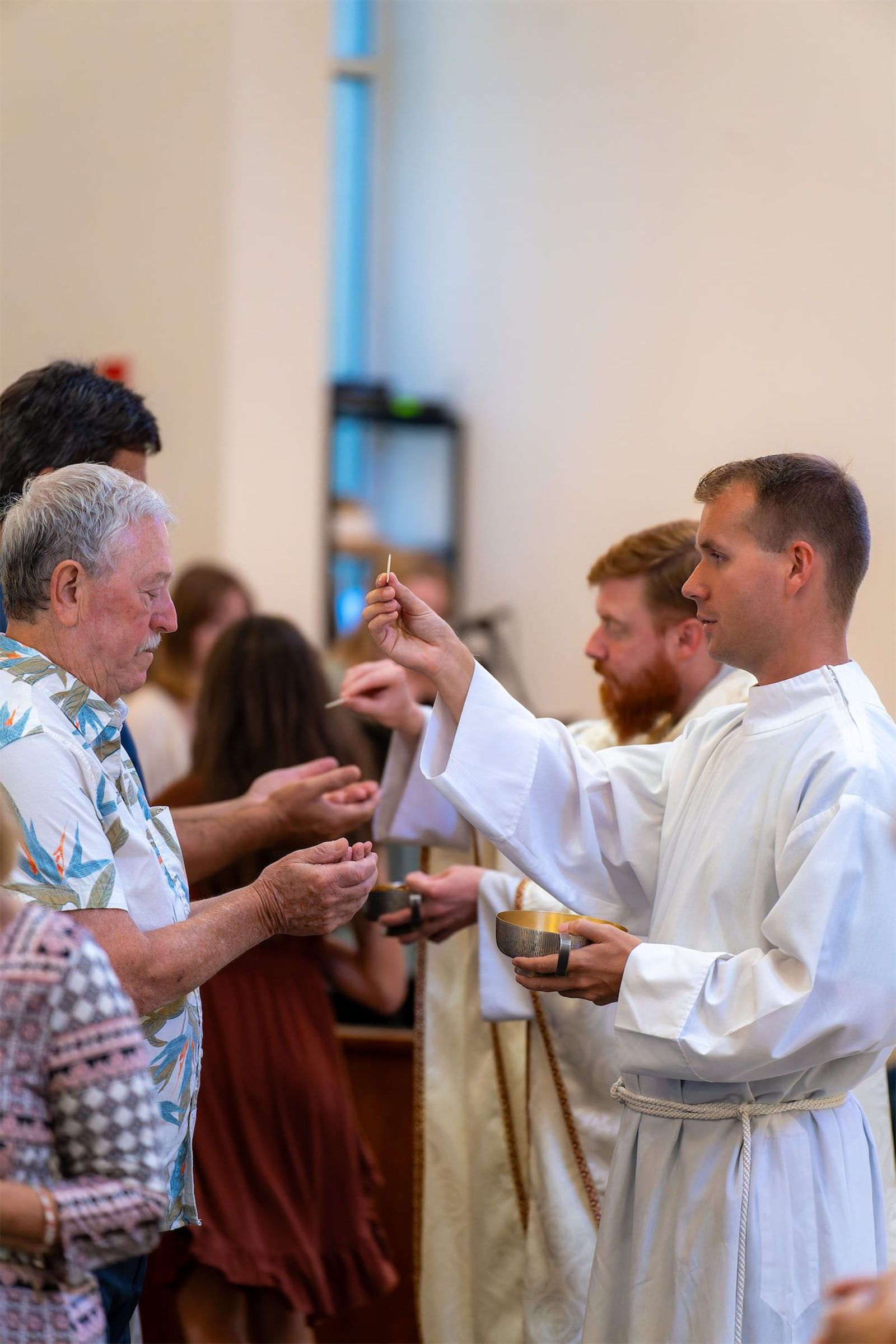
Extraordinary Ministers of Holy Communion
Laypeople holding the Body of Christ in their hands, giving him to others. The word "extraordinary" means something.
The ordinary ministers of Holy Communion are bishops, priests, and deacons, those who have received the Sacrament of Holy Orders. But in most parishes, on most Sundays, there aren't enough ordained ministers to distribute Communion to everyone in a timely way.
So the Church, in her pastoral wisdom, permits laypeople to assist. They're called Extraordinary Ministers of Holy Communion. The word extraordinary isn't honorary. It means this role is outside the ordinary structure, a special permission granted for the good of the faithful.
And yet, what these men and women do is extraordinary in the fuller sense of the word. They hold the Body of Christ in their hands. They look their fellow parishioners in the eye and say, "The Body of Christ." They participate in one of the most sacred moments of the Mass.
That's worth pausing over.
The Weight of It
If you've ever served as an Extraordinary Minister, you know the moment. The priest or deacon places the ciborium or chalice in your hands. You walk to your station. The faithful approach, one by one. You place the host in their hands or on their tongues. You offer the cup. You say the words.
It can become routine if you're not careful. But if you stay awake to what's happening, it never stops being astonishing. You are giving people Jesus: Body, Blood, Soul, and Divinity. The same Christ who walked the roads of Galilee, who died on the Cross, who rose from the tomb. Him. In your hands.
This is why the Church asks Extraordinary Ministers to cultivate a deep Eucharistic devotion. Not just competence, but reverence. Not just showing up on time, but praying before you serve. The way you hold the sacred vessels, the way you speak the words, the way you carry yourself, all of it communicates something to the person receiving.
Beyond the Mass
There's another dimension to this ministry that often goes unnoticed: bringing Communion to those who cannot come to Mass.
The sick. The homebound. The elderly in nursing facilities. Those recovering from surgery or nearing the end of life. For these parishioners, an Extraordinary Minister is often the only connection to the Sunday Eucharist. You bring Christ to them, literally carry him from the church into their room.
This is an extension of the altar into the world. The Mass doesn't end when we leave the building. The Eucharist is meant to go out, to reach those who cannot come in. Extraordinary Ministers make that possible.
If you've never considered this aspect of the ministry, it's worth reflecting on. Visiting the homebound with Communion is quiet work, often invisible to the rest of the parish. But for the person receiving, it can be everything.
Who Can Serve?
Extraordinary Ministers must be fully initiated Catholics, baptized, confirmed, and regularly receiving the Eucharist. They should be people of evident faith, whose lives reflect the dignity of what they're being asked to do.
Training is required. This isn't just about logistics, though logistics matter. It's about understanding the theology of the Eucharist, handling the sacred elements properly, and approaching the ministry with the right disposition.
If you're interested, speak with the parish office. Formation is provided, and you won't be expected to serve until you're ready.
A Word About Reverence
The General Instruction of the Roman Missal asks that Extraordinary Ministers "show the greatest reverence for the Most Holy Eucharist by their demeanor, their attire, and the manner in which they handle the consecrated bread or wine."
None of this is arbitrary. It's recognition of what we're dealing with. The Eucharist is not a symbol. It is Christ himself. How we dress, how we move, how we speak: all of it should reflect that reality.
If you serve in this ministry, let your reverence be visible. Not showy, but sincere. The faithful notice. And more importantly, the Lord you carry deserves nothing less.
An Invitation
If you've felt drawn to this ministry, don't dismiss it. Yes, it's a commitment. Yes, it requires preparation. But it's also a profound way to serve, to participate in the distribution of the greatest gift the Church has to offer.
You won't be doing it alone. You'll be trained, supported, and scheduled in a way that respects your other commitments. And you'll be joining a long tradition of laypeople who have answered this call.
The Eucharist is the source and summit of the Christian life. To help distribute it, to place Christ into the hands of your brothers and sisters, is a privilege beyond measure.