
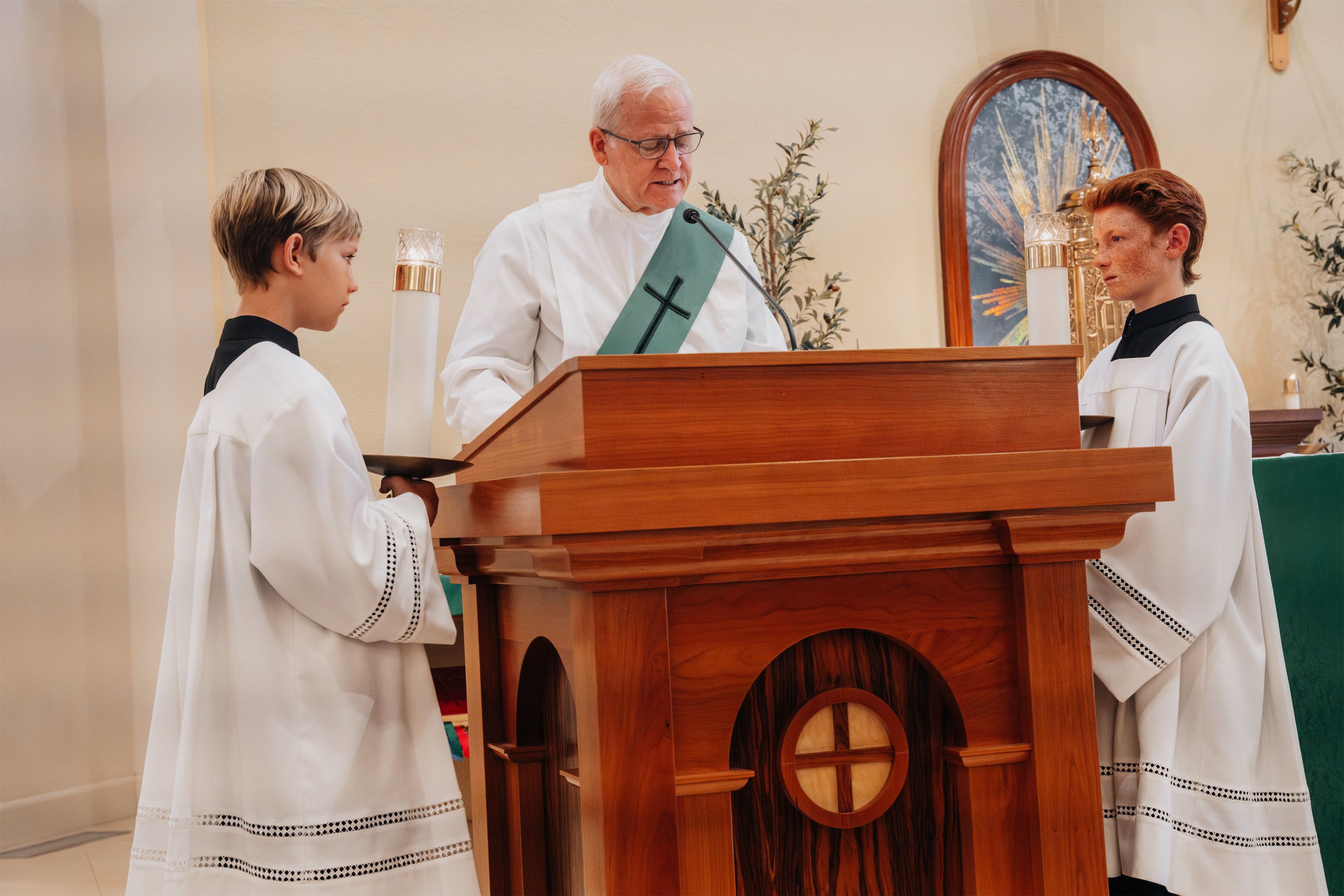
The Liturgy of the Word
Before the altar, there is the ambo. Before the Eucharist, there is the Word. In the first half of Mass, God speaks, and waits for our response.
The Mass has two great movements.
In the Liturgy of the Eucharist, we receive the Body and Blood of Christ. But before that comes something equally sacred: the Liturgy of the Word, where Christ comes to us through Scripture. Two tables, the Church Fathers called them, the table of the Word and the table of the Eucharist. We are fed at both.
This is not preliminary. This is not warm-up. When the Scriptures are proclaimed in the Mass, something happens.
God Himself Speaks
The General Instruction of the Roman Missal puts it plainly: "When the Sacred Scriptures are read in the Church, God himself speaks to his people, and Christ, present in his word, proclaims the Gospel" (GIRM 29).
Read that again. God himself speaks. Christ is present in his word.
We believe in the Real Presence of Christ in the Eucharist. But there is also a real presence in the proclaimed Word. Not the same kind, the Eucharist is Christ's Body and Blood, substantially present. But the Word is not merely words about God. It is God speaking, here, now, to this assembly.
This changes how we listen. We're not just hearing ancient texts. We're being addressed.
The Shape of the Liturgy
The Liturgy of the Word follows a consistent pattern, one that tells the story of salvation:
The First Reading is usually drawn from the Old Testament. We hear of creation, covenant, exodus, exile, prophets. We hear the promises God made and the ways his people responded, faithfully and unfaithfully. This reading is chosen to connect with the Gospel, preparing us for what's to come.
The Responsorial Psalm follows. The psalms are the prayer book of Israel, and they become our prayer too. We don't just listen, we respond. The cantor sings, and we answer with the refrain. The Word begins to echo back.
The Second Reading comes from the New Testament letters or the Book of Revelation. These are the voices of the apostles, Paul, Peter, James, John, teaching the early Church how to live in light of Christ. Their words still instruct us.
Then we stand.
The Gospel
The proclamation of the Gospel is the high point of the Liturgy of the Word.
We rise to our feet, a posture of readiness, of honor. The "Alleluia" is sung (except in Lent, when we use a different acclamation). The Book of the Gospels is carried to the ambo, sometimes in procession with candles and incense. The deacon or priest says, "The Lord be with you," and we answer.
Before the reading begins, we trace a small cross on our forehead, our lips, and our heart. It's a quiet prayer: May the Word be in my mind, on my lips, and in my heart.
Then we hear Jesus. His words. His actions. His encounters with fishermen and tax collectors, lepers and Pharisees, sinners and saints. The Gospels are not biography in the modern sense, they are proclamation. They announce who Jesus is and what he has done. And in the hearing, we meet him.
At the end, the deacon or priest says, "The Gospel of the Lord," and we respond, "Praise to you, Lord Jesus Christ." We have just heard from the Lord himself.
The Homily
After the Gospel, we sit. The priest or deacon preaches.
The homily is not a lecture. It's not a chance for the priest to share his opinions. It is meant to break open the Word, to help the assembly understand what they've heard and how it applies to their lives.
A good homily connects Scripture to the Eucharist we're about to celebrate, to the lives we're about to live. It comforts and challenges. It makes the ancient texts speak to Monday morning.
Some homilies land. Some don't. But the purpose remains: to help the Word take root.
Creed and Intercessions
After the homily, we stand and profess the Creed, either the Nicene Creed or the Apostles' Creed. This is our response to what we've heard. We declare what we believe. The Word has been proclaimed; now we affirm the faith that Word has shaped.
Then come the Universal Prayer, also called the Prayer of the Faithful. Having heard God speak to us, we now speak to him. We bring the needs of the Church, the world, our community, the sick, the dead. The Liturgy of the Word ends not with passive reception but with active intercession.
We have listened. Now we ask.
Preparing to Hear
How do we prepare for this encounter?
The most practical thing is also the simplest: read the readings beforehand. They're available online, in missals, through apps. A few minutes on Saturday night or Sunday morning can open your ears to what you'll hear at Mass.
Arrive early. Settle in. Let the noise of the week quiet down. Ask the Holy Spirit to help you hear what you need to hear.
And when the readings begin, listen. Not passively, the way you might listen to background music. Listen the way you'd listen if someone important were speaking directly to you, because Someone is.
Two Tables, One Meal
The Liturgy of the Word prepares us for the Liturgy of the Eucharist. The two belong together.
In the Word, we hear the story of salvation. In the Eucharist, we participate in it. In the Word, Christ speaks. In the Eucharist, Christ gives himself. We are nourished by both, truth and presence, proclamation and sacrament.
St. Jerome, the great Scripture scholar, put it starkly: "Ignorance of Scripture is ignorance of Christ." The Liturgy of the Word is where the Church ensures that her people are not ignorant, that week after week, year after year, we hear the voice of the Lord and learn to recognize it.
Come hungry to both tables. The Word is food, too.