
Ash Wednesday
A priest marks your forehead and reminds you you're going to die. It's one of the most important days of the year. Here's why.
Ash Wednesday is not a holy day of obligation. The Church doesn't require you to come. And yet, every year, the churches are full.
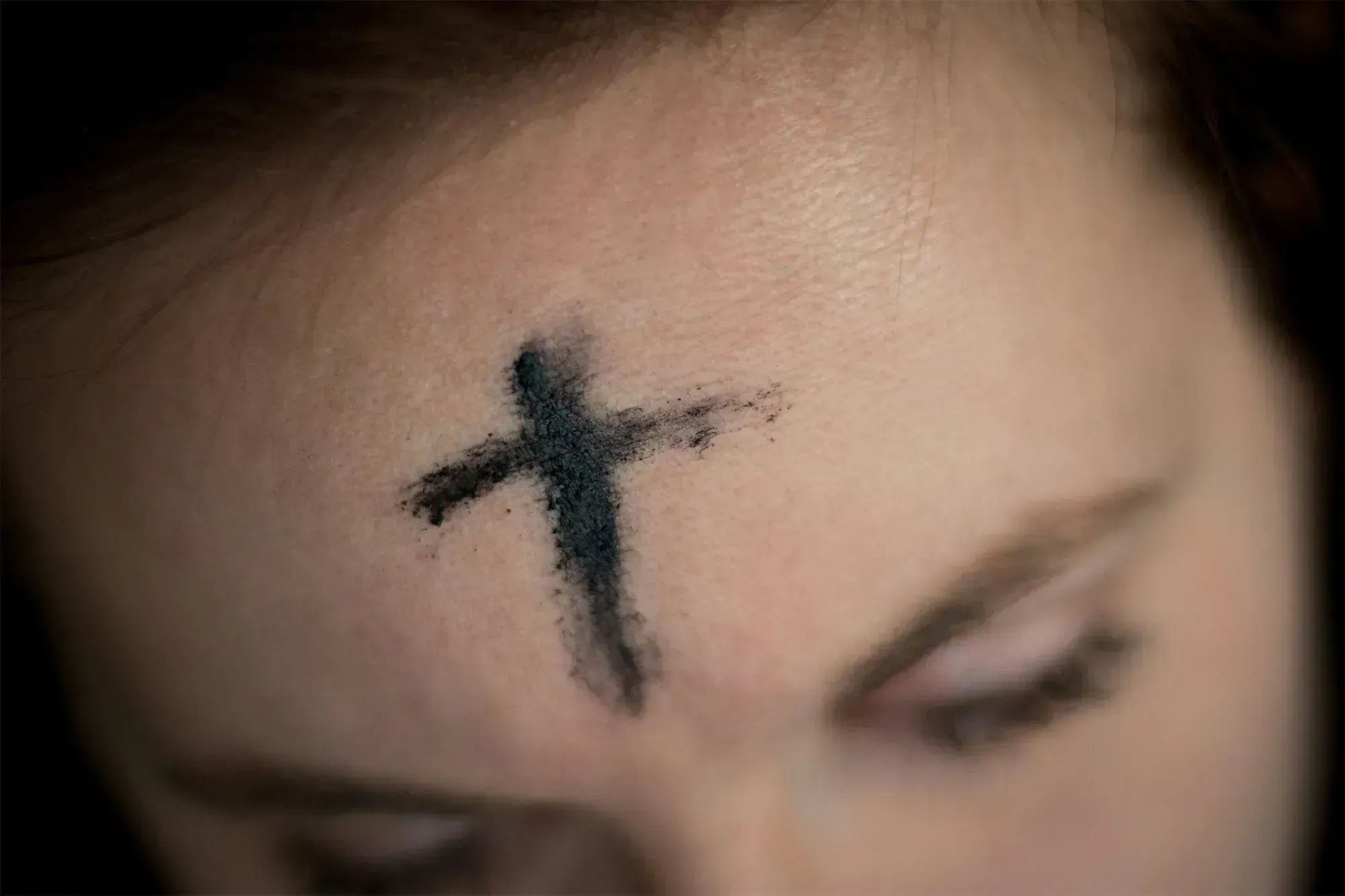
Something about this day draws people in, Catholics who attend Mass every Sunday, Catholics who haven't been in months, even people who aren't sure what they believe. They come to have ashes smeared on their foreheads in the shape of a cross. They come to hear words that the world almost never speaks aloud: Remember that you are dust, and to dust you shall return.
Why would anyone want to hear that?
A Strange Beginning
Lent begins not with inspiration but with confrontation. No soft entrance. No easing into it. On day one, the Church puts her finger on the one thing we spend most of our lives avoiding: death.
You are dust. You will return to dust. Your life is not infinite. Your time is not unlimited. One day, perhaps sooner than you think, you will die.
This isn't meant to be morbid. It's meant to be clarifying. The ancient tradition of memento mori ("remember your death") wasn't about despair. It was about freedom. When you remember that your life will end, you start to ask what actually matters. You stop wasting time on things that don't.
Ash Wednesday is the Church's annual memento mori. And it comes as a gift.
The Ashes
The ashes placed on your forehead are made from palms. Specifically, the palms from last year's Palm Sunday. The same branches that were waved in triumph as Jesus entered Jerusalem are burned to ash and used to mark our mortality.
There's something profound in that. The palms celebrated a king. The ashes remind us that even kings die. The road that began with hosannas ended at a cross. And so will ours, in one way or another.
When the priest or deacon marks your forehead, he says one of two things: Remember that you are dust, and to dust you shall return, or Repent, and believe in the Gospel. Both are wake-up calls. One reminds you of death. The other offers the response: turn around. Believe. There's still time.
A Public Mark
One of the unusual things about Ash Wednesday is that you wear it. You walk out of church with a visible cross on your forehead. You go to work, to the store, to school. People see it.
This can feel awkward. But there's something important in it. For one day, your faith is visible in a way it usually isn't. You're marked. You belong to someone. And if anyone asks, you have a reason to speak.
It's also a kind of solidarity. When you see someone else with ashes, you know: they, too, are entering the desert. They, too, are beginning the journey toward Easter. You're not doing this alone.
Not Obligatory, But Essential
The fact that Ash Wednesday isn't a holy day of obligation makes its popularity even more striking. People come because they want to. Something in us recognizes that we need this.
We need to be told the truth about our mortality. We need to be called to repentance. We need a day that strips away the distractions and says: this is serious. Your soul is serious. The forty days ahead are an opportunity you may not get again.
Fr. Kennell once compared the start of Lent to a halftime speech: "We've got thirty minutes for the rest of our lives." Ash Wednesday is that moment. The season is beginning. What will you do with it?
An Invitation
If you've never received ashes, or if it's been a while, come. You don't need to have your life together. You don't need to have figured out your Lenten plan. You just need to show up and let the Church mark you with the truth.
You are dust. But you are dust that God loves. Dust that Christ died for. Dust that is destined for resurrection.
That's why we begin Lent this way. Not to wallow in mortality, but to see it clearly, and then to walk through it toward Easter.