
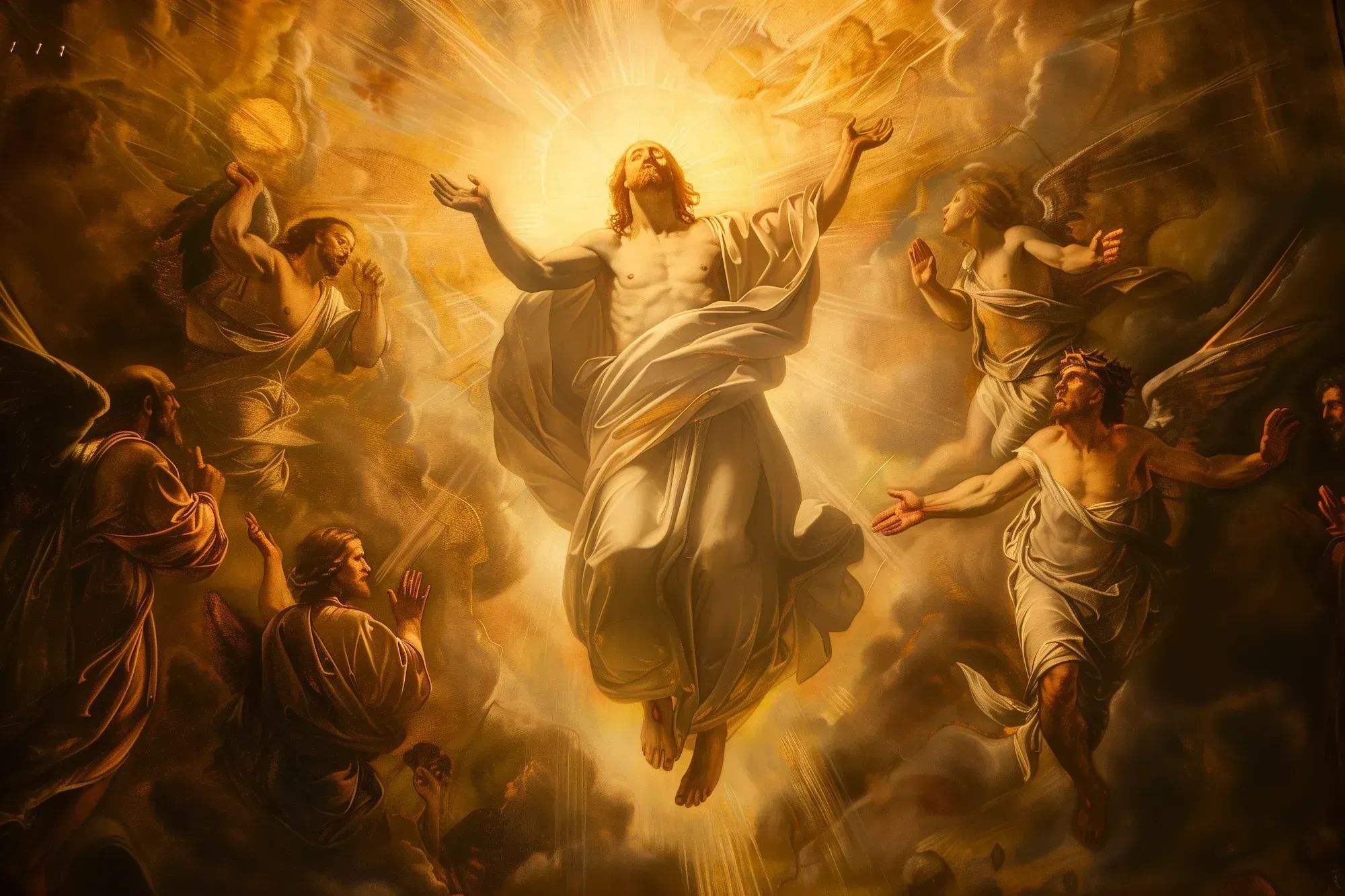
The Ascension
Forty days after Easter, Jesus ascended into heaven, and took human flesh with him. At the center of the Trinity, there is now a beating human heart.
The Ascension can feel like a passing moment in the liturgical year. Easter gets the alleluias. Pentecost gets the fire. The Ascension falls between them, forty days after the Resurrection, and we can be tempted to treat it as a transition rather than an event.
But this feast deserves more attention than we sometimes give it.
When Jesus ascended into heaven, he didn't leave his body behind. He took it with him. The flesh he received from Mary, the hands that broke bread and touched lepers, the side that was pierced, all of it ascended. Human nature, in the person of Christ, entered into the life of the Trinity.
As Fr. Kennell has put it: at the center of the Godhead, there is now a beating human heart.
What the Scriptures Tell Us
The Ascension is recorded in the Acts of the Apostles and the Gospel of Luke. Jesus led his disciples out to Bethany, blessed them, and was taken up into heaven. A cloud received him out of their sight.
Then two angels appeared. "Men of Galilee, why do you stand looking up toward heaven? This Jesus, who has been taken up from you into heaven, will come in the same way as you saw him go" (Acts 1:11).
The question is pointed. Why are you standing here? There's work to do. The disciples don't yet understand it, but the Ascension is not an ending. It's a commissioning.
Why He Had to Go
At the Last Supper, Jesus told his disciples something strange: "It is to your advantage that I go away" (John 16:7). How could his leaving be an advantage?
Because the Ascension makes Pentecost possible. Jesus explained that if he did not go, the Holy Spirit would not come. His physical departure opened the way for a different kind of presence, the Spirit dwelling not beside the disciples but within them. Within us.
The Ascension is not abandonment. It's the necessary condition for intimacy. Christ is no longer limited to one place in Palestine. Through the Spirit, he is present everywhere the Church gathers, everywhere the sacraments are celebrated, everywhere believers call on his name.
Humanity Glorified
Here is the theological heart of the feast: the Ascension reveals what God intends for human nature.
When Christ ascended, he didn't shed his humanity like a garment that had served its purpose. He brought it into glory. The Incarnation is permanent. The Son of God is forever the Son of Mary. And because he has gone before us in human flesh, we have hope that we will follow.
This is why the Ascension matters for us. It's not just about where Jesus went. It's about where we're going. He ascended to prepare a place for us, and to show us that the place is real, that human bodies belong in heaven, that the material world is not discarded but redeemed.
Celebrating the Ascension
In many dioceses in the United States, the Ascension has been transferred from Thursday to the following Sunday, the Seventh Sunday of Easter. This allows more of the faithful to celebrate this holy day, though something is lost when the forty-day count from Easter is obscured.
However your parish observes it, the Ascension is an invitation to lift your eyes, not to escape the world, but to remember where it's all headed. Christ reigns. He intercedes for us. And he will come again.
The angels asked why the disciples stood staring at the sky. The answer is that sometimes you need a moment to take in what has happened. But you can't stay there forever. The Spirit is coming. The mission is beginning.
He ascended so that we could be sent.